cGENIE
cGENIE Earth system model
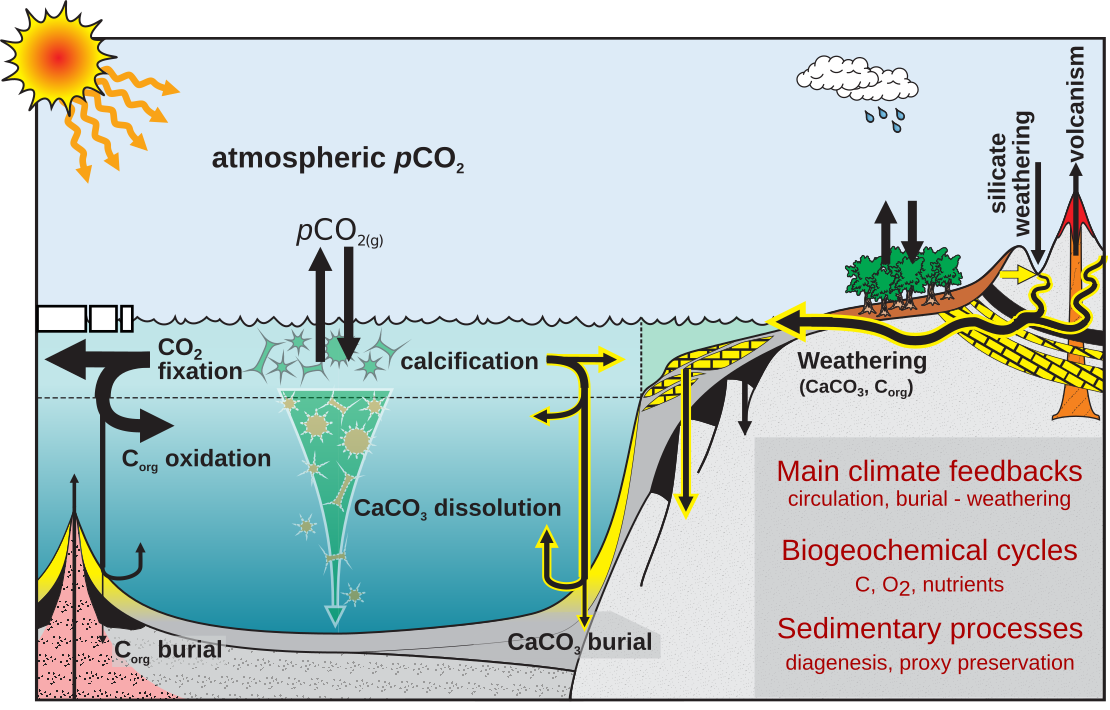
cGENIE is a flexible, intermediate-complexity Earth system model. Its relatively fast runtime makes it possible to run large ensembles and simulations over tens of thousands to millions of years, while still representing the major physical and biogeochemical components of the Earth system.
Exploring different Earth system states
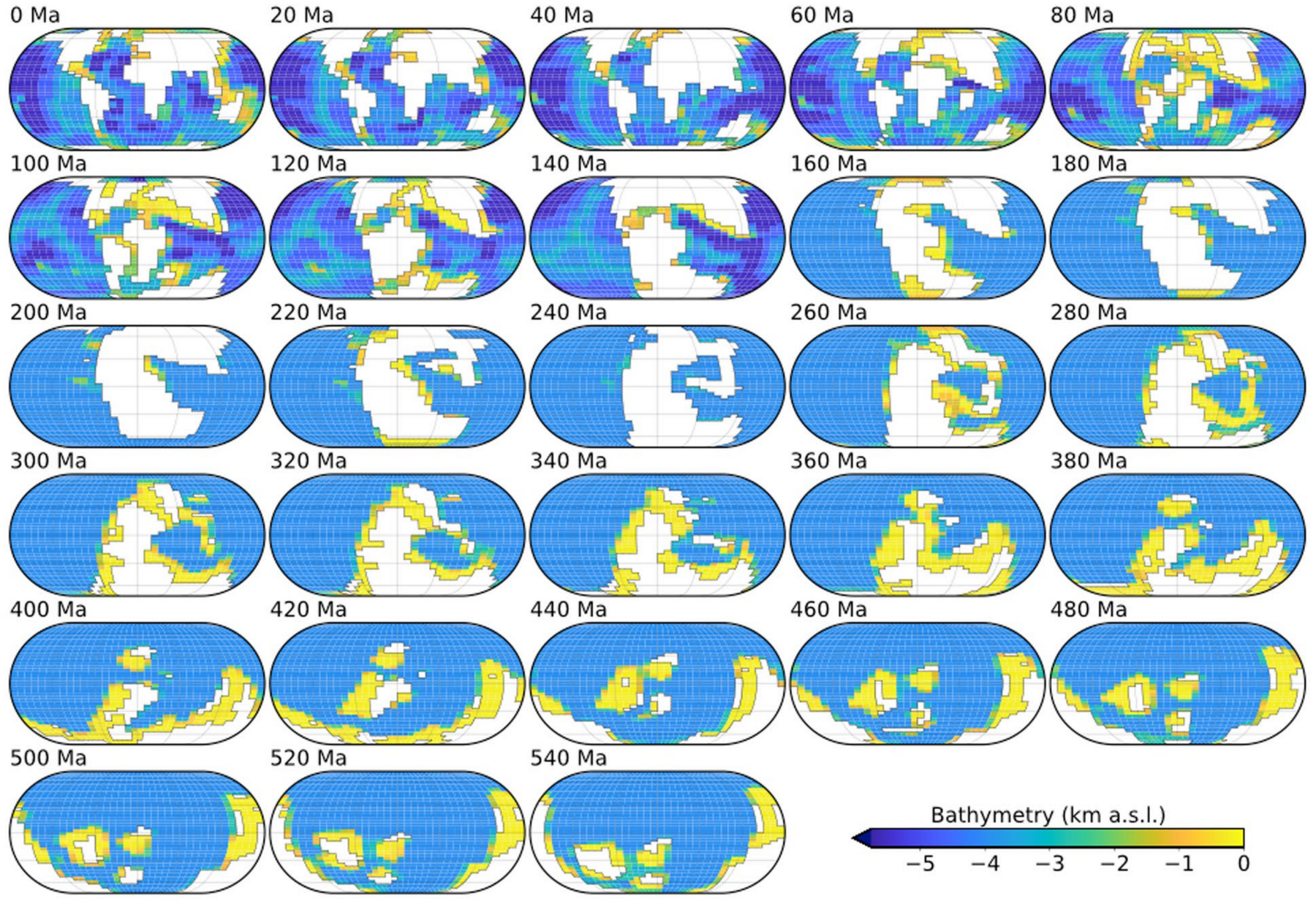
One of the things I particularly like about cGENIE is its flexibility. The model can be configured for very different periods of Earth’s history, allowing us to explore how the same processes and feedbacks operate under very different continental configurations, climates, atmospheric compositions, and ocean nutrient inventories.
Applications
I use cGENIE to investigate how interactions between climate, marine biogeochemistry, ecosystems, and sediments shape the Earth system, from major environmental perturbations to long-term climate stability.
Organic carbon burial and ocean anoxic events
We coupled OMEN-SED to cGENIE to explore how changes in organic carbon burial feed back on ocean chemistry and climate. For Ocean Anoxic Event 2, we investigated how sulfurization - the reaction of hydrogen sulfide (H2S) with labile organic matter - could increase the preservation of organic matter in marine sediments. Our simulations showed that this process can substantially increase organic carbon burial, helping accelerate climate cooling and ocean reoxygenation and, hence, recovery from the event.

Ocean anoxia and mass extinction
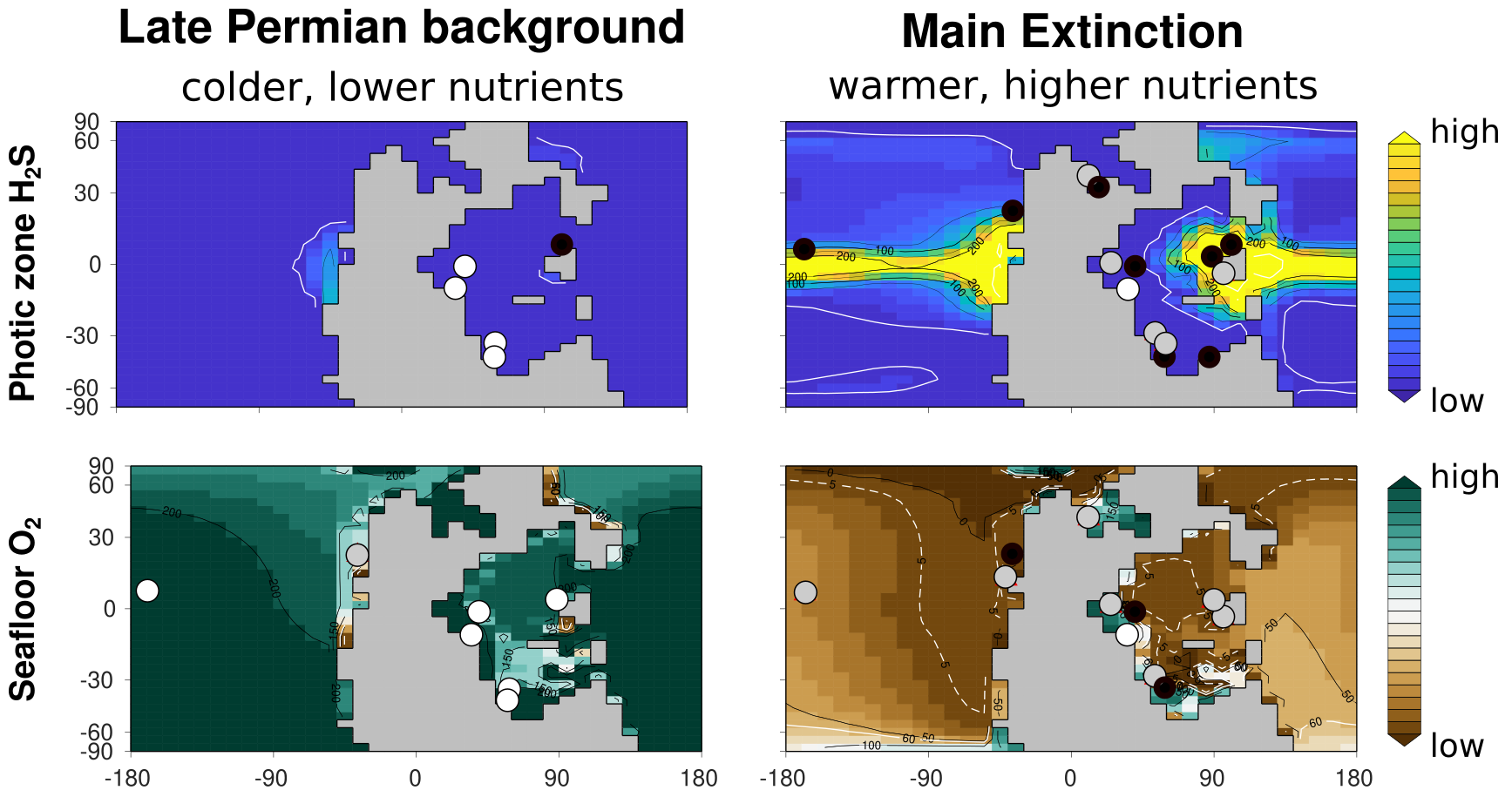
cGENIE also allows us to combine spatially distributed geological observations of redox consitions with simulations of past ocean conditions. For the end-Permian mass extinction, we used observations of seafloor anoxia and photic-zone euxinia (i.e., the presence of H2S) to constrain the model and investigate how warming, nutrient recycling, and ocean oxygenation interacted. Our simulations showed how warming increased microbial activity and nutrient recycling, intensifying oxygen loss and expanding toxic, sulfidic waters onto continental shelves and contributing to the marine extinction.
Earth-system recovery and climate stability
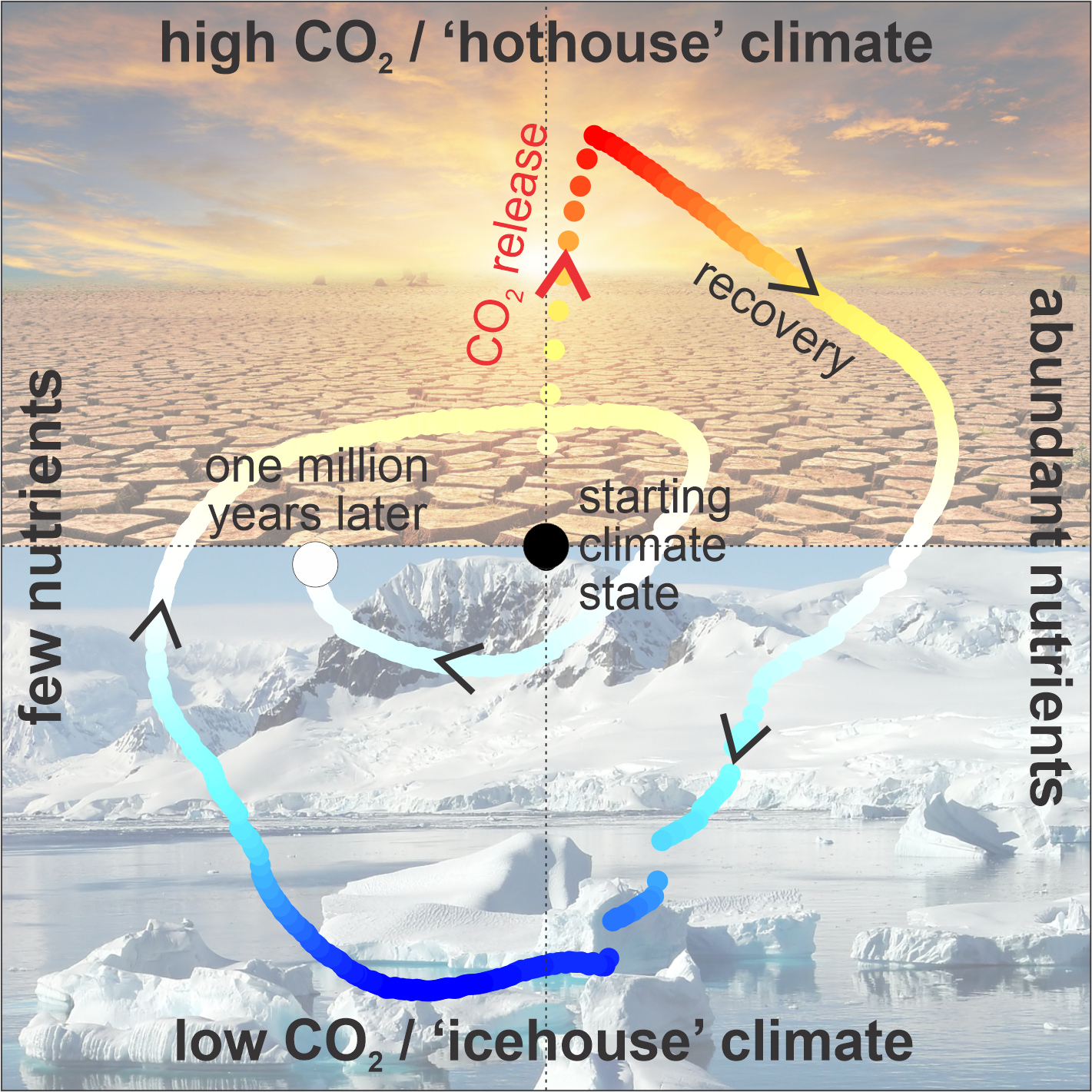
In Hülse & Ridgwell (2025), we used transient cGENIE simulations to investigate how interactions between organic carbon burial, ocean oxygen, nutrient cycling, and climate control Earth-system recovery following massive CO2 release. As the climate warms, more nutrients enter the ocean, stimulating marine productivity and organic carbon burial. At the same time, ocean oxygen declines due to lower oxygen solubility and increased oxygen demand from organic matter degradation. Reduced ocean oxygen increases phosphorus recycling from marine sediments, making even more nutrients available and strengthening the feedback. Our simulations showed that this can greatly accelerate CO2 removal and climate recovery. Under some conditions, the feedback becomes so strong that the climate overshoots its initial state and temporarily enters a colder climate. This provides a possible mechanism for some of the extreme cooling events seen in Earth’s geological history.
Selected publications using cGENIE
Xu et al. (in revision, Geobiology)
Using idealized cGENIE model worlds to explore how atmospheric oxygen, climate, marine nutrients, organic matter export, and continental configuration interact to control seafloor oxygenation.
Vervoort et al. (2026, Paleoceanography & Paleoclimatology)
Investigating how astronomical forcing is transformed by carbon-cycle feedbacks and recorded in marine sediments.
Carrapa et al. (2026, Communications Earth & Environment)
Exploring how volcanic ash fertilization of the ocean may have influenced marine productivity, ecosystems, and global climate during the Late Miocene.
*Hülse & *Ridgwell (2025, Science)
Using transient Earth-system simulations to reveal how organic carbon burial and phosphorus recycling can accelerate climate recovery and lead to unexpected climate instability.
Pohl et al. (2023, Science Advances)
Combining cGENIE with an animal physiological model to show how climate and continental configuration restricted marine organisms’ geographic ranges, increasing extinction susceptibility during the Early Paleozoic.
Hülse et al. (2021, Nature Geoscience)
Combining cGENIE simulations with geological observations to show how warming, enhanced nutrient recycling, and expanding ocean euxinia contributed to the end-Permian mass extinction.
Hülse et al. (2019, Paleoceanography and Paleoclimatology)
Coupling OMEN-SED to cGENIE to investigate how organic matter sulfurization affects carbon burial, ocean oxygenation, and recovery from Ocean Anoxic Event 2.
See my Publications page for the full publication list.
* These authors contributed equally.