Research
My research combines Earth system modelling, marine biogeochemistry, sediment diagenesis, and data-driven approaches to understand the dynamics of the Earth system and the feedbacks that regulate carbon and nutrient cycling, climate stability, and ecosystem resilience across timescales ranging from decades to millions of years. By using the geological past as a natural laboratory, I aim to better understand the long-term consequences of ongoing anthropogenic climate change.
Together, these research directions aim to uncover the biological and biogeochemical feedbacks that regulate the long-term resilience of the Earth system.
Modern Marine Carbon Burial and Biogeochemistry
Marine sediments are Earth’s largest long-term carbon sink and play a fundamental role in regulating climate by storing organic carbon and recycling nutrients that sustain marine productivity. My research combines seafloor observations, machine learning, and numerical early diagenetic models to understand how interactions between marine ecosystems, sediments, and ocean biogeochemistry control carbon sequestration and nutrient cycling from local scales to the global ocean.
Past and current research topics include:
- Early diagenetic modelling (OMEN-SED)
- Global marine organic carbon burial
- Continental margin carbon cycling
- Nutrient regeneration and benthic fluxes
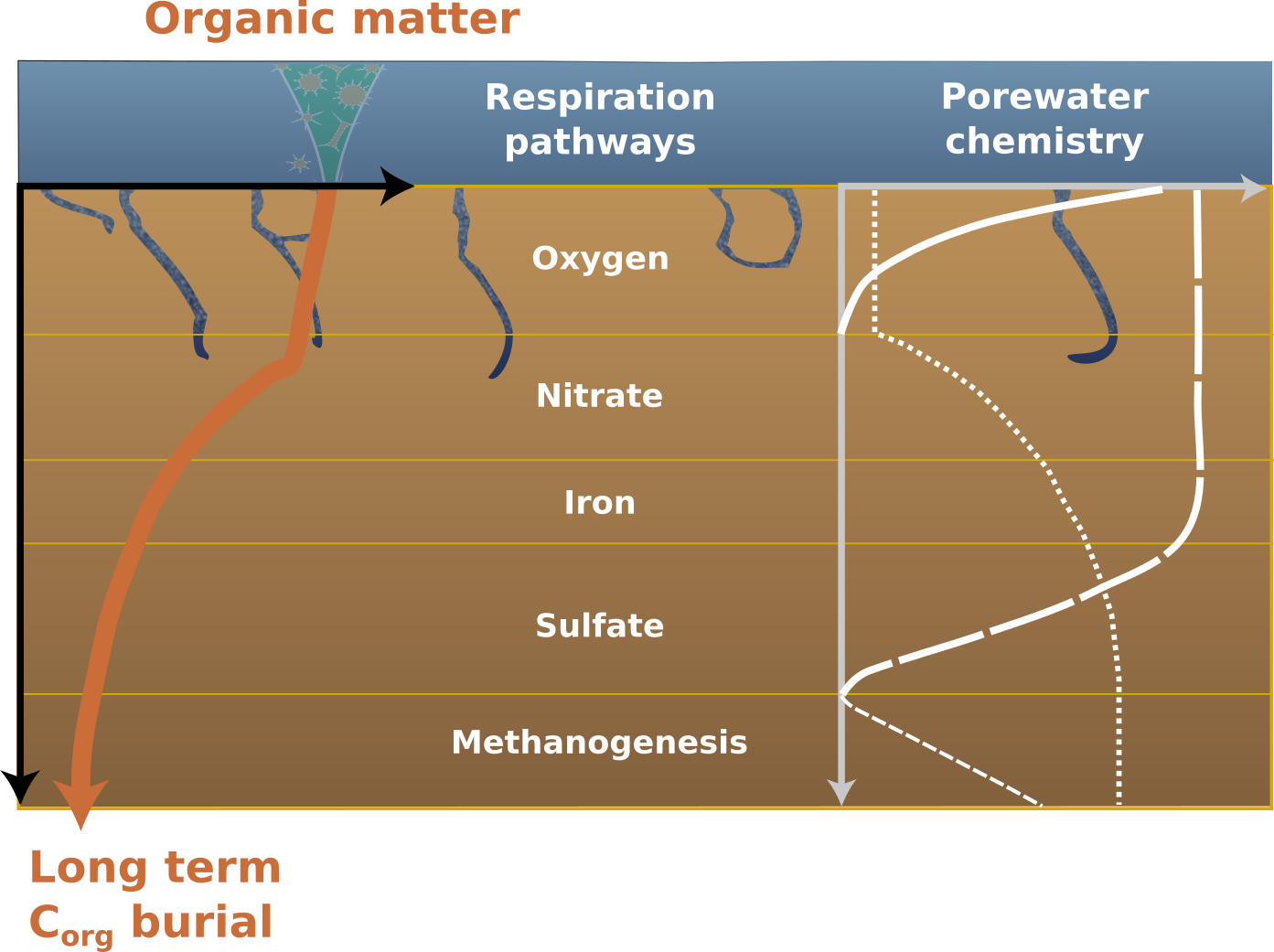
Schematic overview of the OMEN-SED early diagenetic model. The model simulates organic matter degradation, redox zonation, porewater chemistry, and benthic carbon and nutrient cycling to quantify long-term organic carbon burial in marine sediments.
Earth system dynamics through geological time
I use Earth system models to investigate how interactions between climate, marine ecosystems, ocean circulation, biogeochemistry, and sediments have shaped Earth’s climate throughout geological history. My work focuses on understanding the mechanisms controlling carbon-cycle feedbacks, climate recovery, and environmental change during past greenhouse climates and mass extinction events. Insights gained from my modern sediment research provide important constraints for these long-term simulations.
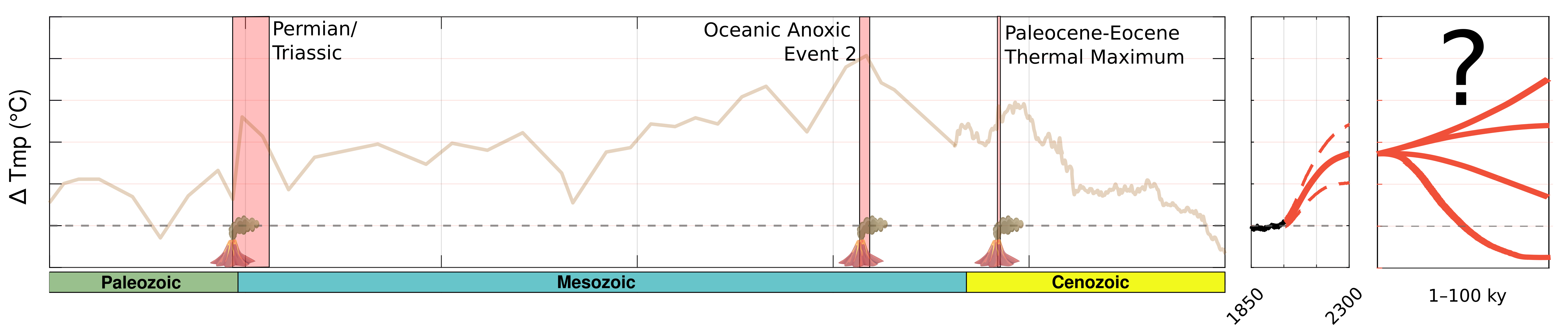
I use Earth system models to investigate past climate change, carbon-cycle feedbacks, and possible future trajectories of the Earth system.
Past and current research topics include:
- Carbon-cycle feedbacks during greenhouse climates
- Ocean deoxygenation and anoxia
- Mass extinctions and Earth-system resilience
- Large igneous province volcanism and climate change
Earth System Models and Geological Archives
Earth system models provide a framework for interpreting geological proxy records. I develop numerical approaches that help quantify how climatic and biogeochemical signals are transferred, altered, and ultimately preserved in geological archives. This includes modelling organic caron and carbonate diagenesis and developing numerical approaches to better quantify uncertainties in the interpretation of geological proxy records.
Past and current research topics include:
- Diagenetic modelling and proxy signal preservation
- Quantitative interpretation of geological proxy records
- Uncertainty in paleoclimate reconstructions
- Earth system model–data integration
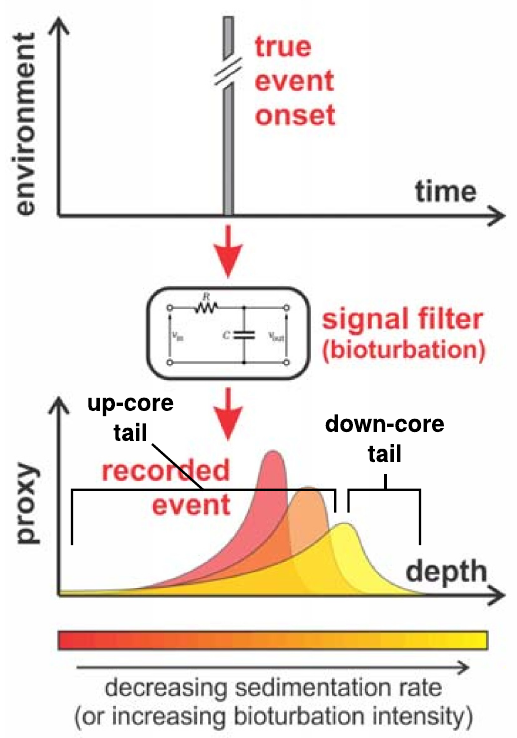
Sediment mixing (bioturbation) can blur, delay, and attenuate environmental signals preserved in marine sediments, complicating the interpretation of geological archives (adapted from Hülse et al., 2022).